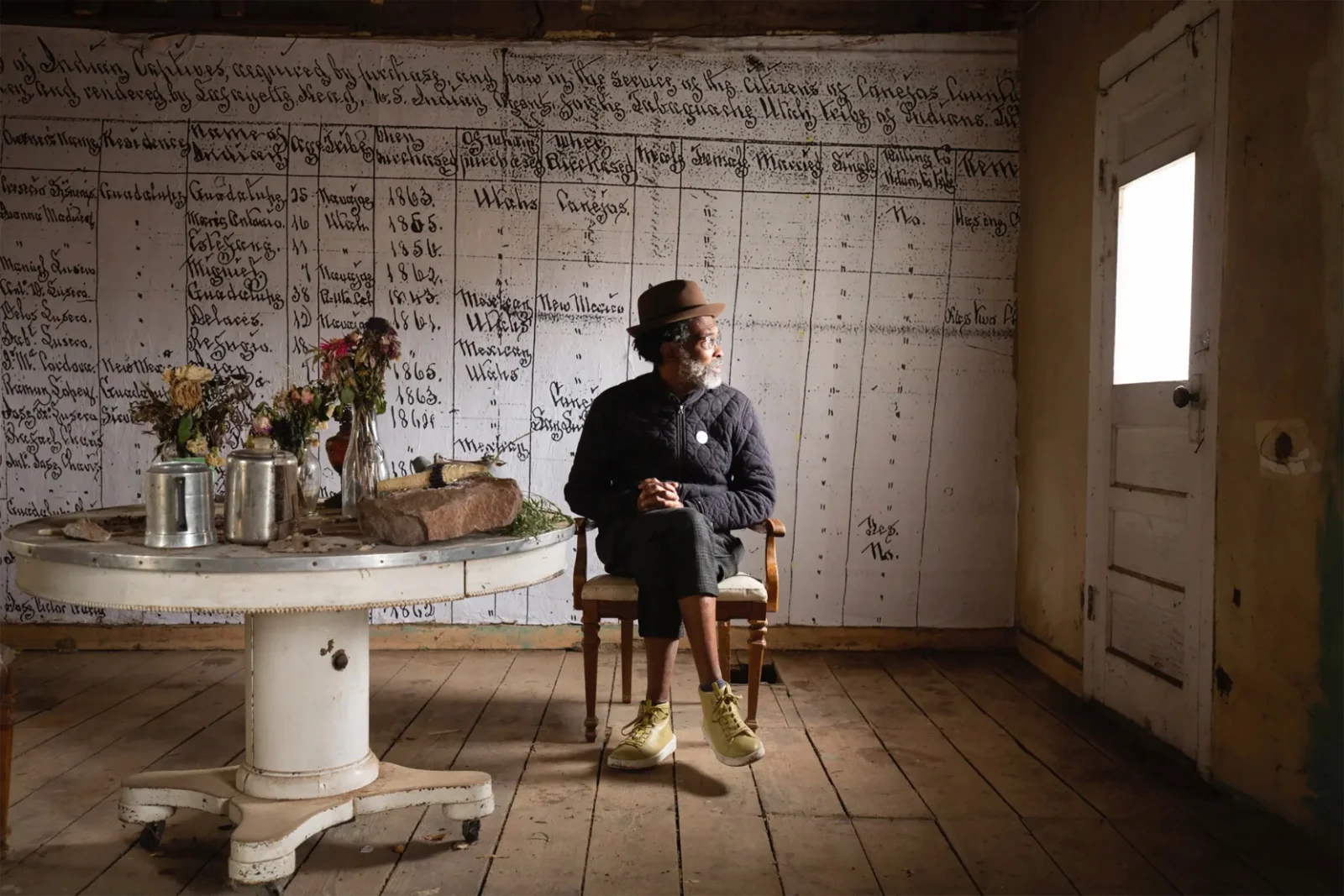
Bio
Chip Thomas, aka “jetsonorama” is a photographer, public artist, activist and physician who worked between Monument Valley and The Grand Canyon on the Navajo nation from 1987 - 2023. There, he coordinated the Painted Desert Project – a community building effort which manifested as a constellation of murals across western Navajo Nation painted by artists from all over the world.
Thomas’ own public artwork consists of enlarged black and white photographs pasted on structures along the roadside on the Navajo Nation and elsewhere. His ethos is to reflect back to communities the love and beauty that they have shared with him.
From doctor to street artist: A journey of expression
From doctor to street artist: a journey of expression
When I started wheat pasting in 2009 the question I was asked most frequently was “how did a black doctor in his 50s working on the Navajo Nation start doing street art?” Fair enough, but in retrospect, it was only natural for this evolution to occur.
I started working in a small community between the Grand Canyon and Monument Valley called Inscription House in 1987. I’d always been drawn to photography since 8th grade and built a darkroom shortly after my arrival on the Navajo Nation. My passion photographically is shooting 35mm black and white film in a documentary style (inspired by the likes of Eugene Smith, Eugene Richards, Joseph Koudelka, Salgado, Garduno, Robert Frank, Garry Winogrand and others. By going out and spending time with people in their homes and family camps, I got to know them as friends and not just patients. Not surprisingly, these home visits enhanced my doctor/patient relationship by helping me be a more empathetic health care practitioner and to literally walk in other’s shoes.
Meanwhile, I’ve always been drawn to street art, graffiti and old school hip-hop. I was attracted to the energy of popular culture in the 80s (punk, hip hop, new wave, no wave, funk), and though I was miles away in West Virginia from the epicenter, a friend and I thought of ourselves as charter members of the Zulu Nation. I’d travel to New York City to see graffiti on trains, on buildings and in galleries. I did some tagging in the 80s before coming to the Navajo Nation. I wrote freehand “Thank you Dr. King. I too am a dreamer” and I made a “SMASH APARTHEID stencil that I spraypainted around Toledo.
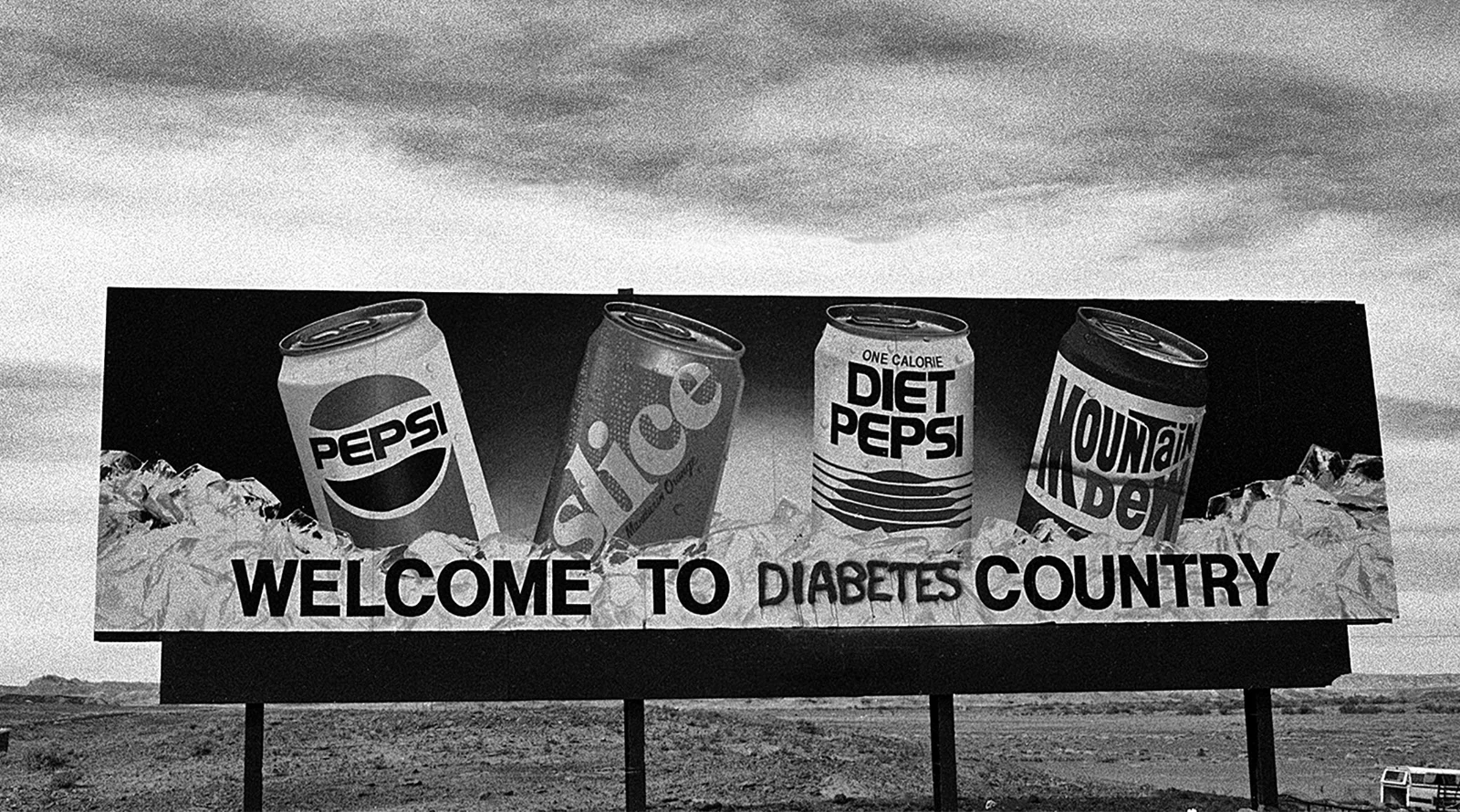
In 1988 a public nurse friend and I corrected a billboard on Diné Bikéyah. (See below.)
Then, it all came together in 2009 when I took a 3-month sabbatical to Brasil. This trip coincided with a difficult period in my life. Though I wasn’t looking for an epiphany, I was fortunate to stumble upon a passionate group of artists working on the street who befriended me. I got to go with them as they painted pieces on city walls. I got to look through sketch books and got turned on to videos of street artists like Blu. It was during this time that I saw pictures of JR’s work in Rio from 2008 (“Women Are Heroes”), which was mind-blowing for me. Before leaving Brazil one of the artists in the crew that adopted me embraced me and told me to “keep this energy going!”
For me, JR found the missing link. Here was this guy who combined my two passions – black and white photography and street art. Boom! It was a revelation. I had to figure out how he was doing this, so I found his email address and sent him a note asking if he’d be interested in doing a project on the Navajo Nation. I waited 3 weeks to hear something back. During this time as I drove the open, red sandstone, pinyon, juniper and sage filled land punctuated with mesas and buttes between Inscription House fifty-five miles away to Page, I started noticing buildings on the land where work might go if JR were to come. (Note. I’d been living on the Navajo Nation for 22 years at this point and this drive 55 miles to the supermarket had suddenly stopped being routine. It suddently became the setting for a dialog with the land and the people.)
Inspired by Diego Rivera and Keith Haring, I’d become disinterested in showing my photographs in galleries isolated from the people I was photographing. I wanted to pursue a more immediate relationship with my community reflecting to them some of the beauty they’ve shared with me. And in truth, I loved and missed the feeling I got being with the artists in Salvador do Bahia. Truly wanting to find a way to keep that vibe going, I started pasting images along the roadside in June 2009.
Video
Native American Dignity at a Monumental Scale
About that Guinness world record….
Thanks!